Empowering Mason County with Sound Money
Beat The Inflation Tax - Your Savings Are at Risk - Return to Real Money!
Here is the true story of how our money became DEBASED by hapless, corrupt politicians and greedy businessmen starting in 1913. Leaving us with a worthless inflating currency and forcing us into living as DEBT SLAVES.
Read on for a short lesson why your spending power and savings are at risk and how to move to higher ground.
The Return of Real Money
Why U.S. States Are Reclaiming Gold and Silver
For most of human history, the word "money" was synonymous with gold and silver. It was a tangible asset with intrinsic value, chosen by the free market over millennia. Today, we live in a world of "fiat currency"—paper notes and digital entries whose value is dictated by government decree and faith in the institutions that issue them. But a quiet and powerful movement is growing across the United States.
State legislatures are beginning to challenge the federal monopoly on money, not by creating a new system, but by re-acknowledging the oldest one. They are re-establishing gold and silver as legal tender, a move that is less about nostalgia and more about financial survival and constitutional principle.
This article explores the deep historical and legal reasons for this shift, from the very definition of "common law money" to the modern-day laws being passed in statehouses from Utah to Tennessee.
Ready for the Action Plan? Register for our next Free Seminar in Ludington
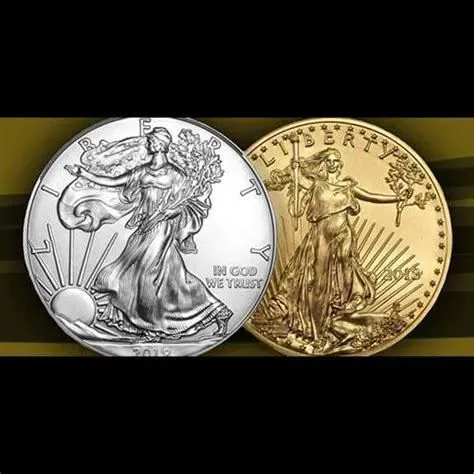
What is "Common Law Money"?
The Original Constitutional Standard
To understand why states are "returning" to gold, we must first understand what money is. The modern person might think of money as the U.S. dollar, but this confuses "money" with "currency." The distinction is the most important concept in economics.
● Money has intrinsic value. It is an asset.
● Currency has extrinsic value. It is a tool used to represent money or value. A dollar bill is a promise, a "note" from the Federal Reserve.
For thousands of years, gold and silver were chosen by people—not by governments—as the ultimate form of money. This happened organically across countless civilizations because the market discovered that these metals had the perfect combination of properties:
1. Durable: They do not rust, rot, or decay. A gold coin from ancient Rome is still recognizable and valuable today.
2. Divisible: They can be easily divided into smaller units (coins, bars) without losing their value.
3. Portable: A small amount holds a large amount of purchasing power.
4. Uniform (Fungible): An ounce of pure gold in Africa is identical to an ounce of pure gold in Asia.
5. Limited Supply: They are scarce. Governments and banks cannot simply create more of them out of thin air, which protects their value over time.
Because this market-driven consensus existed for centuries, it became the foundation of our legal system. This is the essence of "common law money." The principles of English Common Law, which form the basis of the U.S. legal system, were built upon a world where debts, contracts, and payments were all fundamentally understood in terms of a specific weight and purity of gold or silver.
The founders of the United States were intimately familiar with this. They had just fought a revolution funded by the disastrous, hyper-inflated "Continental," a paper currency that became so worthless it spawned the phrase "not worth a Continental."5 They were determined to prevent the new federal government—and especially the individual states—from repeating this mistake.
Their solution was written directly into the Constitution, in Article I, Section 10:
"No State shall... coin Money; emit Bills of Credit; [or] make any Thing but gold and silver Coin a Tender in Payment of Debts..."
This clause is the constitutional anchor of the entire modern sound money movement. Its language is a direct acknowledgment of gold as common law money. The founders weren't creating a gold standard with this text; they were recognizing the one that already existed. They were explicitly forbidding the states from doing what the Continental Congress had done: creating their own paper currency ("emit Bills of Credit") and forcing their citizens to accept it as payment ("make any Thing... a Tender").
In this original American framework, gold wasn't valuable because the government said so. The government used it because it was already valuable. The dollar itself was defined not as a piece of paper, but as a specific weight of metal.6 The Coinage Act of 1792 defined a U.S. dollar as 371.25 grains of pure silver or 24.75 grains of pure gold. The paper notes that circulated for much of our history were not "dollars"; they were "gold certificates" or "silver certificates," which were, in essence, warehouse receipts—a claim check for the real money held in a vault.
Ready for the Action Plan? Register for our next Free Seminar in Ludington
The Great Departure
How "Currency" Replaced "Money"
If the Constitution was so clear, how did we end up with a system where our money is just paper (or digital) "legal tender" with no backing? This shift didn't happen overnight. It was a gradual, deliberate, and two-step process by which the federal government first severed the link between the dollar and gold for its citizens, and then for the rest of the world.
Step 1: The Domestic Break (1933)
In the depths of the Great Depression, President Franklin D. Roosevelt signed Executive Order 6102.7 This order did the unthinkable: it made it illegal for U.S. citizens to own gold bullion, gold coins, or gold certificates. Citizens were forced to turn in their gold—their real money—to the Federal Reserve in exchange for $20.67 in paper currency.
This act fundamentally broke the "common law" contract. A paper dollar was no longer a claim check for money; it was now a replacement for it. The government had seized the asset and left the people holding the receipt. Immediately after this confiscation, Roosevelt re-valued the dollar, declaring that it now took $35 to buy an ounce of gold. With a single act, the government had "paid" for the people's gold with paper notes and then immediately devalued those notes by over 40% on the world stage. From this point on, gold was something only governments could hold and trade. The American people were left with a pure fiat currency, its value dictated entirely by the federal government.
Step 2: The International Break (1971)
While U.S. citizens couldn't redeem their dollars for gold, foreign governments still could. Under the Bretton Woods agreement, the U.S. dollar was the world's reserve currency, and its value was fixed at $35 per ounce of gold. This tether, however weak, kept some discipline on U.S. spending.
By 1971, however, the cost of the Vietnam War and massive social spending led other nations to suspect the U.S. had printed far more dollars than it had gold to back them up. They began demanding gold in exchange for their dollars. In a move known as the "Nixon Shock," President Richard Nixon appeared on television and announced he was "temporarily" suspending the convertibility of the dollar into gold.
That "temporary" suspension is now over 50 years old. That was the day the U.S. dollar—and by extension, the entire global financial system—became a pure fiat currency. Its value is based on nothing but "full faith and credit," a global agreement, and its status as "legal tender."
This is where statutory law fully replaced common law. Today, 31 U.S. Code § 5103 states: "United States coins and currency... are legal tender for all debts, public charges, taxes, and dues." This statute is a legal force. It requires creditors to accept Federal Reserve Notes to settle a debt, whether they want to or not.
The consequence of this 100% fiat system is the permanent, persistent inflation we now accept as normal. Without the anchor of gold, there is no physical limit to the amount of currency the Federal Reserve can create. More currency chasing the same amount of goods and services is the definition of inflation, which is a subtle, slow-motion theft of the purchasing power of your savings.
Ready for the Action Plan? Register for our next Free Seminar in Ludington

The "Sound Money" Resurgence
How States Are Fighting Back
Frustrated by federal monetary policy and the constant erosion of the dollar's value, dozens of states have begun to fight back. They are not trying to overthrow the dollar; they are simply giving their citizens a choice and an alternative.
This movement is a direct re-assertion of the 10th Amendment and the principles of Article I, Section 10. If the federal government has created a fiat currency, states can at least re-enable the use of real money as defined in the Constitution.
This state-level "sound money" movement is advancing on two major fronts: first, by removing the tax barriers that penalize holding gold, and second, by actively recognizing gold and silver as legal tender.
Front 1: Removing Tax Barriers (The "Passive" Approach)
Before states can recognize gold as money, they must first stop treating it as a commodity. Taxing precious metals is illogical if they are, in fact, money. You don't pay a sales tax when you exchange a $20 bill for twenty $1 bills, and you shouldn't be penalized for exchanging $2,000 in paper currency for a one-ounce gold coin.
● Eliminating Sales Taxes: This is the most common and successful front. As of 2024, 43 states have partially or completely eliminated sales taxes on the purchase of gold and silver bullion. This widespread success shows a growing understanding that precious metals are a form of savings, not a consumer good like a car or a television. States like Wisconsin (in 2024) and Tennessee (in 2023) are among the most recent to join this overwhelming majority, leaving only a few holdouts like Vermont, New Jersey, and Maine.
● Eliminating Capital Gains Taxes: This is the more advanced step.13 When gold's "price" rises from $2,000 to $2,500 an ounce, you haven't actually made a $500 "profit." It's more accurate to say the dollar lost purchasing power. That $2,500 now buys the same (or less) than the $2,000 did before. Taxing this "gain" is, in reality, a tax on inflation—a penalty for protecting your wealth. States like Utah, Oklahoma, and Arizona have taken the lead by eliminating state capital gains taxes on precious metals, officially treating gold and silver as money, not a speculative "investment."
Front 2: Active Legal Tender Declarations (The "Active" Approach)
This is the boldest step, where states pass affirmative laws that directly recognize gold and silver as a permissible form of payment, just as the Constitution intended.
● Utah (2011): The pioneer of the modern movement.14 Utah passed the "Legal Tender Act of 2011," which recognized U.S.-minted gold and silver coins (like the American Gold Eagle) as legal tender. The law allowed citizens to pay state taxes in gold and silver and opened the door for contracts to be written and enforced in terms of metallic money.
● Wyoming: Perhaps the most forward-thinking state, Wyoming has not only recognized gold and silver as legal tender but has also established itself as a "sound money sanctuary."16 It has authorized the creation of state-chartered depository institutions that can manage gold-backed accounts, effectively creating a modern banking system built on real assets.
● Oklahoma, Arkansas, and Tennessee: These states have followed suit with their own legal tender laws. In 2024, Tennessee passed a law authorizing the state treasurer to hold a portion of the state's funds in physical gold and silver, a massive step toward protecting the state's own financial reserves from dollar depreciation.17
This legislative trend, tracked by organizations like the Sound Money Defense League, is creating a "patchwork of freedom" where citizens in sound money states are increasingly insulated from the consequences of federal monetary policy.
Ready for the Action Plan? Register for our next Free Seminar in Ludington
The Future of Money
Why This State-Level Movement Matters
It is tempting to dismiss these state-level actions as symbolic or antiquated. After all, you cannot buy your groceries at Kroger with a Silver Eagle coin. But to do so is to miss the profound, long-term implications of this "bottom-up" monetary revolution. This movement isn't about forcing anyone to use gold; it's about allowing everyone to.
1. It Provides Choice and Competition.
For the first time since 1933, these laws give Americans a legal, viable, and penalty-free alternative to the Federal Reserve Note. It allows individuals, businesses, and the states themselves to save and transact in an asset that cannot be devalued by a central bank. This creates competition. If the dollar is a stable and reliable store of value, people will use it. If it is not, they now have an "exit ramp" to a form of money that has preserved wealth for 5,000 years.
2. It Offers a Hedge Against Systemic Risk.
When state governments, like Tennessee, decide to hold physical gold in their treasury, they are buying insurance. They are protecting their taxpayers and their state's financial obligations from the risks of a depreciating dollar, runaway national debt, and systemic financial instability. It's an act of profound fiscal prudence that provides a backstop independent of Wall Street or Washington D.C.
3. It Restores the Constitutional Framework.
This movement is a powerful re-assertion of states' rights and the original constitutional design. The founders envisioned a system where the federal government was constrained and the people were free to use the money they trusted. By methodically dismantling the tax penalties and legal barriers that have propped up the fiat monopoly, states are restoring that framework, piece by piece.
For the average person, this movement is transforming gold and silver from a "speculative investment" back into what they have always been: real money. In a "sound money state," you are free to buy, hold, and use precious metals as a form of savings without being taxed as a consumer or penalized as an investor.
While the "common law money" of gold may seem like a relic, it is rapidly becoming a key to the future. As the fiat currency system shows increasing signs of strain, the states that have rebuilt the legal foundations for real money will be the ones that stand on the most stable financial ground.
Ready for the Action Plan? Register for our next Free Seminar in Ludington